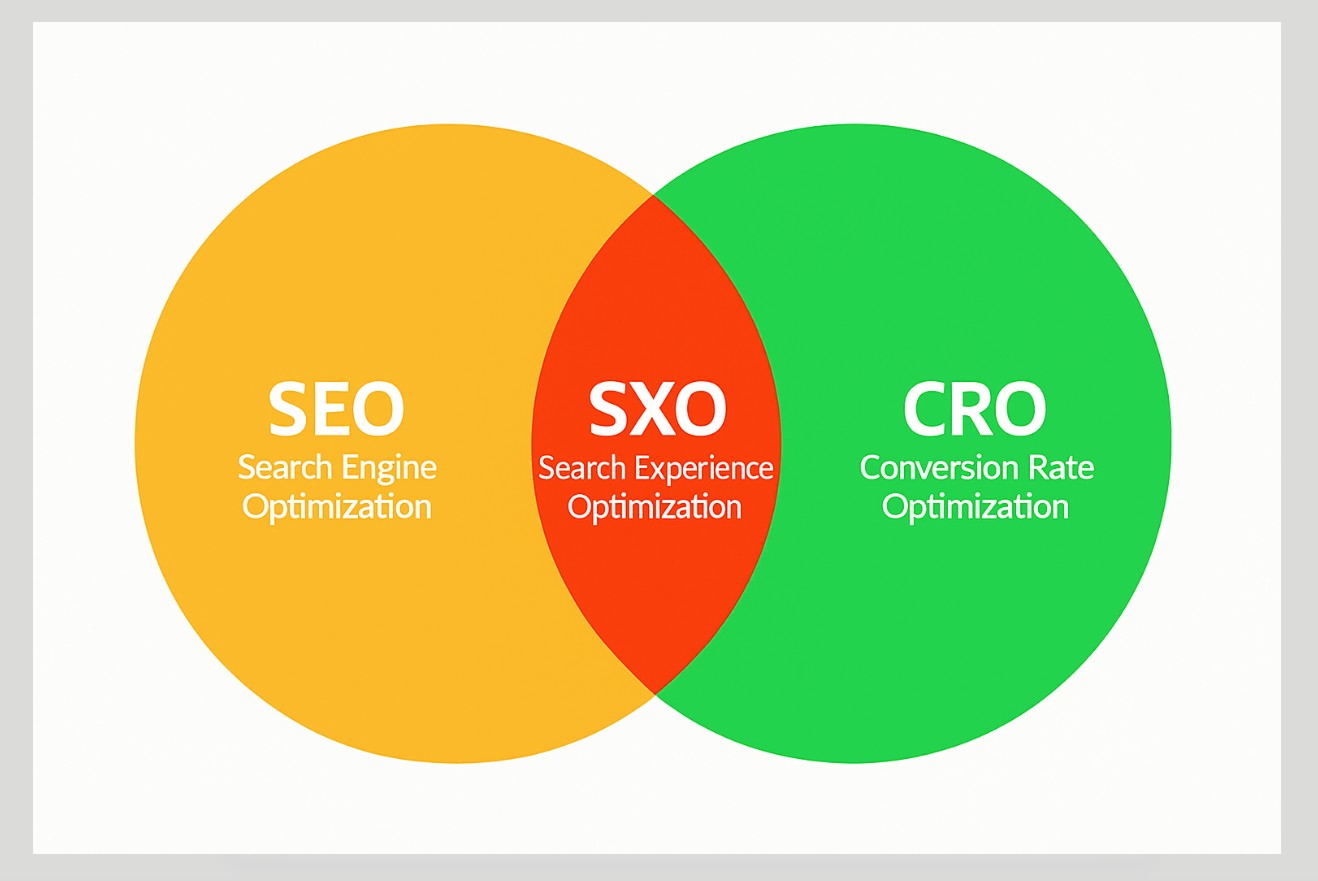
Search Experience Optimization (SXO) is the work of making your site show up in search engines and also perform well when people visit. It brings together SEO, user experience (UX), and conversion optimization (CRO) into one simple method, so you are not only getting visitors but also turning them into results.
Ranking high is not enough if people leave quickly. That is why SXO looks at more than just being seen. It makes sure your content matches what people want, your site opens fast, the design is simple, and every button or link has meaning.
This is important because 75% of people do not go past the first page. So being seen is only the start. Your site must not only show up, it must also deliver. SXO helps with this by giving a smooth, high-quality search experience that pleases both Google and the people clicking.
What Is Search Experience Optimization (SXO)?
Search Experience Optimization (SXO) is a digital plan that mixes SEO, UX, and conversion steps to make sites easy to find and simple to use. It works on bringing the right people to your site and guiding them to act once they are there.
Think of this: you search on Google, click the first link, and boom—it loads slow, looks messy, and shows content you do not want. You leave.
SXO is made to stop this from happening.
It matches your content, design, and speed with how people search and use websites. It looks at intent, clear layout, fast loading, and structure, so users quickly find what they want and know what to do next.
This became important when search engines started looking at user actions. Even with strong keywords, a site that annoys visitors will not stay on top.
Now, SXO is the shared work of SEO pros, UX designers, and CRO experts. It covers setup, site design, content, and calls to action. The aim is simple: lead users from search to solution with no trouble.
What’s The Importance Of SXO?
Search Experience Optimization is important because it affects how easily people find your site, how well they use it, and if they will come back. It connects visibility and usability, making sure your site works well both in search engine results and in real user visits. Without SXO, you may rank, but you won’t retain. You might get clicks, but not conversions.
A site built with SXO in mind loads fast, answers search intent, and guides users without confusion. That leads to higher engagement, lower bounce rates, and better conversion rates, all signs of a site that’s working as it should.
7 Steps For Improving SXO
Improving SXO means making the full search journey better, from query to click to conversion. Here’s how to do it:
1. Focus on Real Search Intent
Before you create content, know what people are really looking for. Are they browsing, comparing, or ready to act?
Example: If someone searches “best landing page builder for startups,” they want a short list with pros, cons, pricing, and screenshots. Give them that.
2. Create Useful Content
High-quality content means solving a problem clearly and quickly. Write to solve, not to stuff keywords. Make sure your content matches your title and snippet.
Example: If your H1 says “How to Increase Conversions,” but your intro talks about marketing trends, you already lose usability and users. Get to the point fast.
3. Make Navigation Easy
If users can’t find what they need, they will leave. Good SXO uses simple design, smart layout, and quick access to info.
Example: Hiding pricing behind many scrolls is a bad user experience. Show important content clearly and structure pages around user needs.
4. Keep Your Tech in Check
Users won’t wait. A slow, broken, or glitchy site kills trust fast. The same is true for bad mobile design.
Example: If your mobile load time is over three seconds, you lose traffic. Test on devices. Prioritize mobile design and reduce heavy images, extra scripts, or autoplay videos.
Pro tip: Use Google PageSpeed Insights to see what slows your site down and fix it.
5. Write Better Meta Titles and Descriptions
Your snippet is the first impression. It should be clear, human, and match what’s on the page.
Example: Instead of “Landing Page Tips – Company Name,” write “7 Landing Page Tricks That Boosted Our Signups by 40%.” Make people curious to click.
6. Keep Users Engaged Longer
Once people visit your site, help them explore more. Internal links, clean design, and clear calls to action matter.
Example: After a post on A/B testing, suggest a free template or another guide. Engagement like that improves SEO and builds loyal users.
7. Watch the Data, Then Adjust
See how people behave on your site. What they click, where they leave, which pages hold them. Use this to improve.
Example: You test two landing pages. One has a CTA at the top, one at the bottom. The top CTA works better. You just improved conversions with real data.
How To Measure SXO Results?
To measure SXO results well, you need both SEO data and user behavior data. Tracking only keywords or traffic is not enough. You also need to check how people use your site, how easily they move around, and if they finish key actions like purchases or sign-ups.
Good SXO measurement should cover three parts:
-
Visibility (can people find you?)
-
Engagement (do they stay?)
-
Outcomes (do they convert?)
Start with behavior. If people leave in a few seconds or don’t explore, something is wrong. Maybe the content does not match their search, or the site is confusing. Metrics like time on site, bounce rate, and pages per visit show if the experience is working.
Next check conversions. A page with traffic but no sign-ups or sales may need stronger CTAs, better design, or clearer text. SXO removes friction. If conversions rise, you’re on the right track.
Also, watch your search performance: impressions, CTRs, and organic traffic growth. These numbers show if your content is visible and attractive in search results.
Don’t forget technical signals. Core Web Vitals, site speed, and mobile usability affect both users and search engines. Use tools like Google Analytics, PageSpeed Insights, and heatmaps to get the full picture and improve what’s broken.
What Are The Benefits Of SXO?
The benefits of SXO include better search visibility, happier users, higher conversions, longer visits, more trust, and an edge over competitors.
First, SXO attracts the right audience. Not random clicks, but users with real intent. That’s because SXO starts with knowing what people search for and shaping content to match. When your page meets the need, you get traffic that stays.
Then, they stay longer. With fast speed, clear design, and simple layout, users don’t leave quickly. They scroll, explore, and engage. Every second they stay tells Google your page is useful.
Next comes action. With no confusing forms or hidden buttons, conversions happen smoothly. Visitors are guided step by step, and a good experience makes them convert more often.
SXO also builds memory. People remember sites that feel easy. They come back, recommend, and buy again. That’s how SXO turns first-time visitors into loyal users.
Behind the scenes, SXO also helps Google rankings. It checks all boxes: mobile-friendly, relevant content, strong SEO, and user engagement. These improvements last long term.
So yes, SXO boosts traffic, engagement, visibility, and conversions. But more than that, it makes your site feel built for the person, not just the search engine.
What Are The Limitations Of SXO?
The limits of Search Experience Optimization include the speed at which search behavior changes, the difficulty of matching user intent, and the technical pressure it puts on your site. Users shift from typing short keywords to speaking full questions, and what worked yesterday may feel outdated today. Updating content to match changing search queries, especially voice and semantic search, needs constant effort.
There is also hidden pressure. SXO is not only about writing good content. It also depends on very fast site speed, smooth mobile design, and strong technical SEO. Not every team can manage that on all pages.
And since search results are already full of well-optimized content, standing out needs more than best practices. It requires regular updates, smart use of engagement data, and a lot of patience. SXO is useful, but it is not a simple or quick fix.
Understand SXO In SEO To Boost Landing Page Traffic
If you want to grow landing page traffic, you need to look beyond rankings and focus on the user experience after the click. That is the strength of Search Experience Optimization (SXO). It connects SEO with real user behavior to bring in the right audience and guide them toward action.
SXO makes your content easier to find in search results, but more importantly, it makes it easier to use. When landing pages match search intent, load quickly, and give useful content in a clean, simple layout, users stay, scroll, and convert. This is how you connect content creation with conversion optimization, keeping people engaged through the whole user journey.